

Hanging vs. box shipping
The challenge of fashion logistics for hanging garments
Brands and dealers invest a lot of time and money in presenting high-quality clothing such as blazers, jackets, suits, dresses and outfits in perfect condition in their stores, particularly in the premium segment. Handling these hanging garments involves more work and costs as the garments have to be unpacked, ironed and hung up, and then the packaging materials disposed of. To comprehensively evaluate the Supply Chain however, every single process has to be considered, from receiving the garments after production to the point of sale, to be able to make definitive statements on costs, quality, transport speed and CO2 footprint.
Optimizing the process by shipping hanging garments
In the Retail Box system from DACHSER, clothing is transported end to end on clothes hangers. This insures that the garments don't get creased and are delivered in perfect condition to the customer. There is no need to unpack the box or steam the clothes — the fashion can be hung up and sold in the store right away. In addition to better handling and fast delivery times, the Retail Box system also reduces the procurement and disposal of packaging material, which improves the CO2 footprint and makes the overall Supply Chain more sustainable.
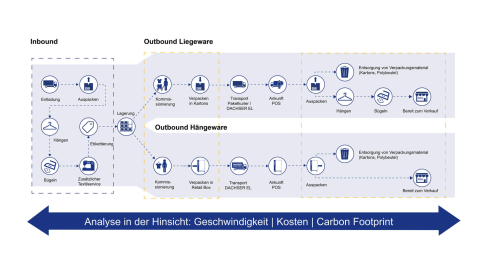
Process comparison for transporting hanging and folded garments
Our products for shipping hanging garments
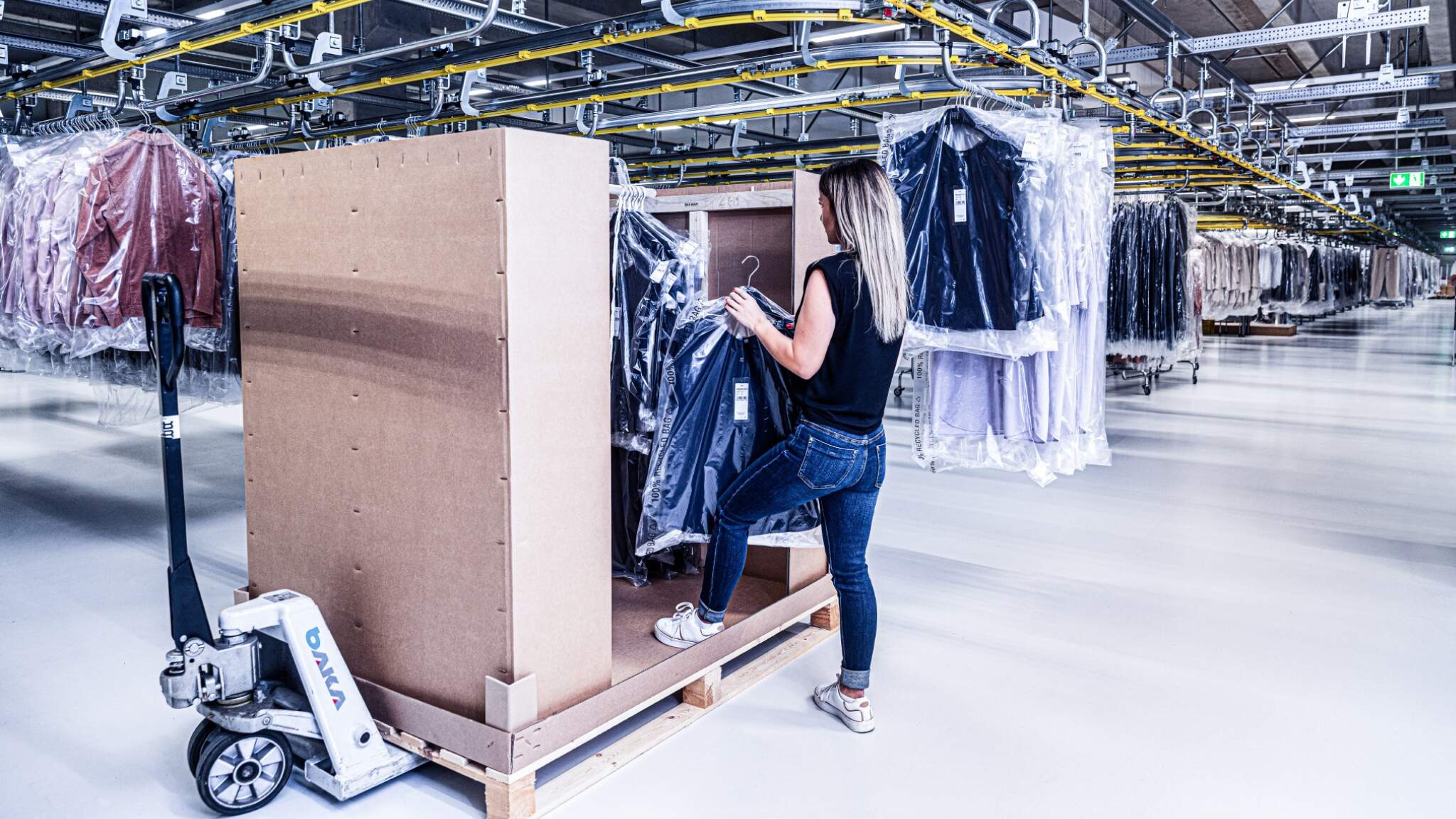
DACHSER Fashion Logistics has developed two innovative reusable transport solutions for hanging and folded garments in the form of the Retail Box and the ProFashional Box; both mean significantly reduced costs for your fashion logistics. The two products for direct delivery to the point of sale are impressive with incredible reusability and transparent tracking — immensely increasing efficiency in your Supply Chain.

Your benefits at a glance:

- Transport network: Our global presence means we can efficiently control international Supply Chains. Using our expansive network of European land transport as well as air and sea logistics gives you fast and flexible access to all sales and procurement markets worldwide.
- Warehouse network: Over 150 warehouse locations across Europe with 1.6 million m² of storage space are available for your textile logistics.
- System solutions: By completely integrating road, air and sea logistics in DACHSER Interlocking, we offer you end-to-end logistics solutions for global procurement, warehousing and distribution.

- Qualität: Einheitliche Prozess- und Servicestandards innerhalb unserer Produktfamilie entargo sowie Automatisierung sichern eine gleichbleibend hohe Qualität für Ihre Transporte in ganz Europa.
- Standardisierung: Standardisierte Prozesse und Services in allen DACHSER Niederlassungen weltweit sichern eine gleichbleibend hohe Transportqualität.
- Individualisierung: Unsere Experten für Fashionlogistik entwickeln maßgeschneiderte, speziell auf Ihre Wünsche ausgerichtete Logistiklösungen.
- Know-how: Unser Team für die Modelogistik vereint umfassende logistische Expertise mit branchenspezifischem Knowhow für Ihre Textillogistik.

- Zuverlässigkeit: Unser weltweites Transportnetzwerk mit der Kombination aus Luft- und Seefracht sowie Schienen- und Straßentransporten sichern die schnelle, zuverlässige Lieferung Ihrer Warensendungen.
- Transparenz: Dank europaweit einheitlicher Standards in der logistischen Abwicklung und einer durchgängigen Sendungsverfolgung per Tracking & Tracing haben Sie Ihre Transporte jederzeit im Blick.
- Innovation: Mit der Förderung von Forschungsprojekten im Bereich nachhaltiger Technologien und innovativen Ladungsträgern für Luftfracht und LKW-Transporte steigern wir nachhaltig die Qualität Ihrer Lieferungen.
- „Magic Moment“: Nahtlose Lieferketten ermöglichen eine maximal beeindruckende Customer Journey mit „Magic Moment“ am POS.
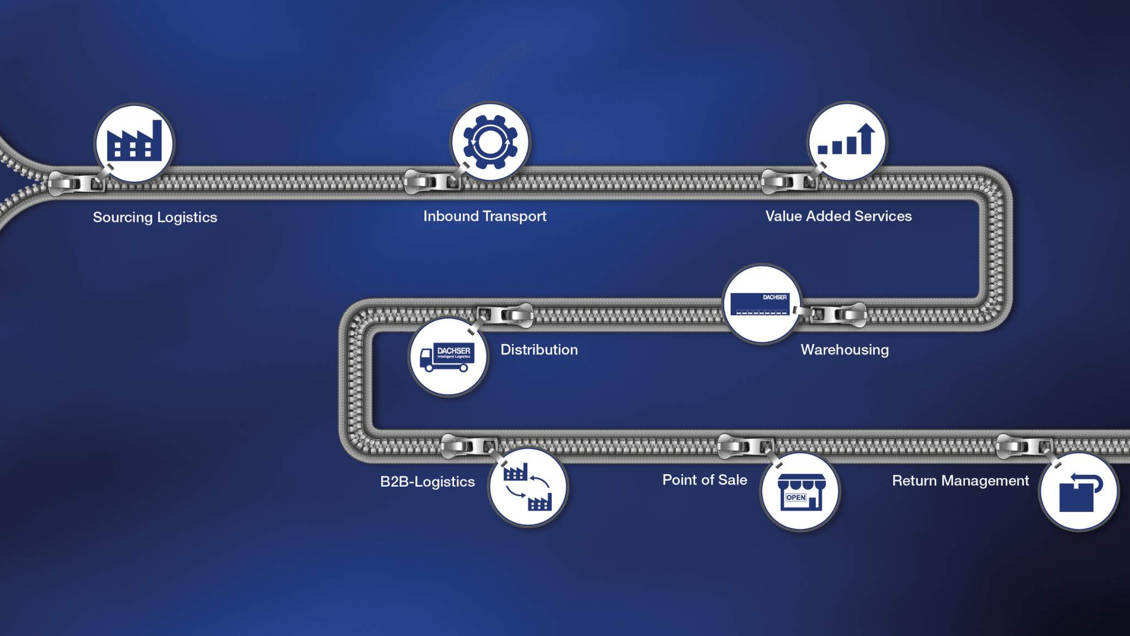
The DACHSER Fashion Logistics Zipper in detail
Sourcing logistics
- Vendor management
- Time-to-market management
- Order management
- Global logistics services
- Optimal data integration through EDI
Inbound transports
- Procurement
- Transport
- Warehousing
- Needs-based delivery
Value-added services
- Value-added services
- Inspection services
- Order picking and packing
- Floor-ready services
Warehousing
- Quality services
- Consolidation services
- Tailor-made solutions
- Warehouse management system
Distribution
- Transport solutions for hanging garments (GOH – Garment on Hanger)
- GOH with optimal space-utilizing packaging
- Time-optimized transport solutions
- Web-based logistics applications
B2B logistics
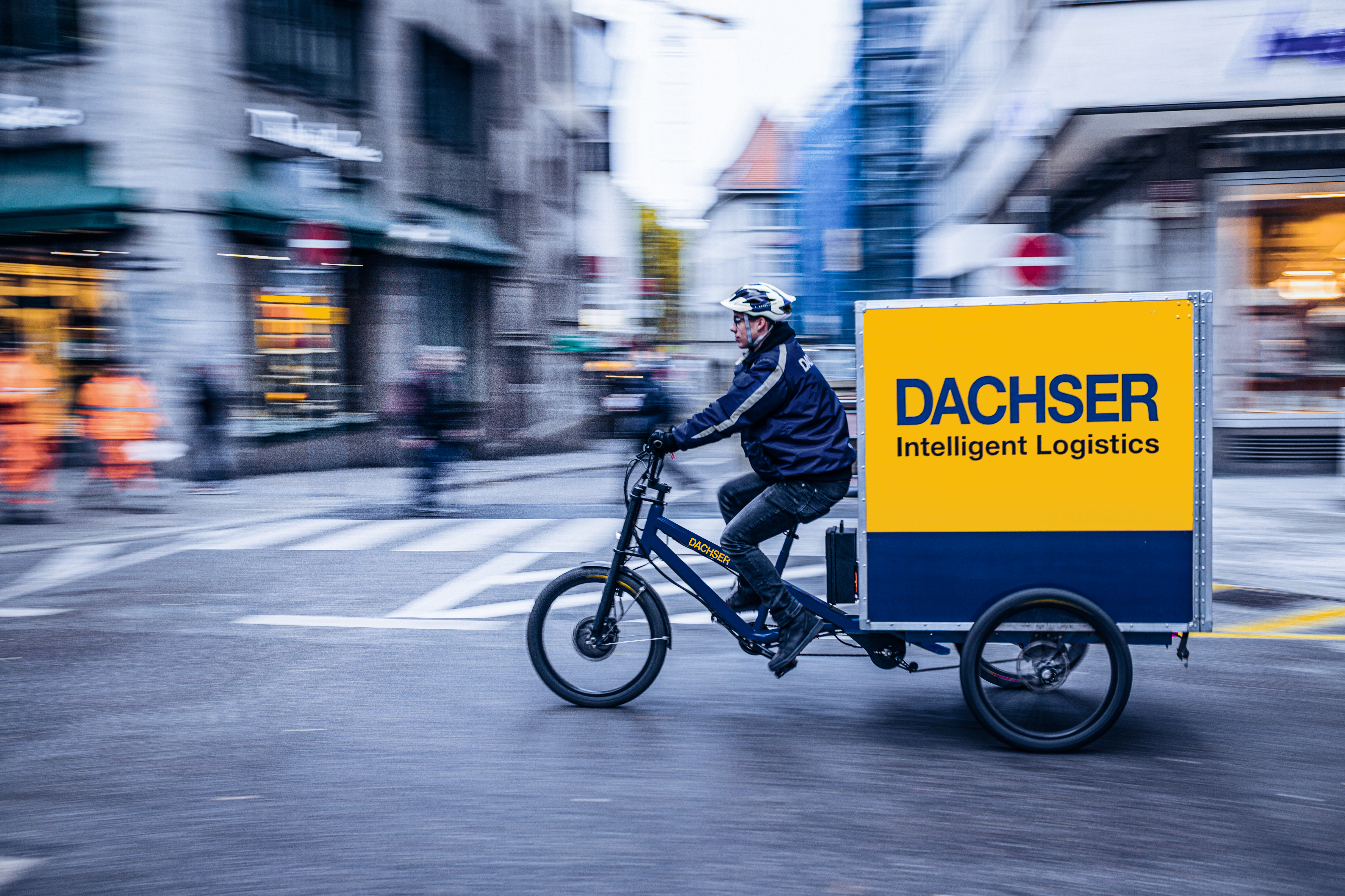
- Urban delivery
- Locally emission-free delivery in defined zones
Point of sale
- Retail logistics
- Delivery in arranged time windows
- Delivery from store to store
Returns management
- Returns for remaining stock and B goods
- Transport solutions for hanging garments (GOH – Garment on Hanger)
- GOH with optimal space-utilizing packaging
- User-friendly online applications
Answers to frequently asked questions about fashion logistics
What are the challenges of fashion logistics?
In the fashion industry, fast-changing trends and collections come up against the high demands of in-store and online customers for shipments and returns, packaging and sustainability. For companies, it's a struggle to meet these challenges in the long term. By outsourcing fashion logistics to a fulfillment service provider, companies can offer their customers consistently high quality in all areas. Fashion fulfillment providers such as DACHSER use automated processes to create an efficient and transparent Supply Chain ranging from acceptance of goods and appropriate storage, to order picking, packaging, shipment and returns management.
What advantages does fashion fulfillment have over a service provider?
Shipping hanging garments in special transport solutions such as the Retail Box or ProFashional Box saves fashion retailers a lot of time and work in the stores. The garments don't get creased because the textiles are transported on hangers. In addition to this the items of clothing don't need to be unpacked from multiple, individual boxes. The garments, including clothes hangers, are simply hung up in the store directly from the transport box — so there's no need to iron or steam the items and they arrive in perfect condition.
What benefits does shipment of hanging garments have for textiles?
In terms of revenue, fashion and accessories were responsible for about a quarter of all online trade in Germany in 2023. Consumers have long been used to receiving their order within a few days, and just as easily and quickly returning goods they don't want to keep. For fashion fulfillment it's a challenge to combine the large number of returns and growing customer demands with their own needs for cost-effectiveness and sustainability. With a fashion logistics service provider such as DACHSER, fashion and textile companies hand over all logistical tasks such as warehousing, order picking, shipment and returns management to the experts — and can then focus on giving their end customers an incredible purchasing experience.
What role does returns management play in fashion logistics?
Textile processing plays an important role, particularly in returns management. Clothing and textiles are delicate and can get creased, stained or slightly damaged during unpacking or when trying them on. Whenever garments are returned, they have to be checked for any damage and reconditioned where necessary. Fashion logistics service providers such as DACHSER take over these time-consuming tasks. After reconditioning, the items of clothing or accessories are relabeled, packaged and returned in flawless condition to the retailer's range.
Why is sustainability in logistics becoming a bigger and bigger topic in the fashion industry?
Lack of resources, climate change and pollution are changing the way the fashion industry thinks. Manufacturers and retailers have to deal with increasing production costs and new laws on increasing sustainability. At the same time, end customers are demanding sustainable fashion: More and more consumers want to know where and how their clothes are produced and transported — and companies that can prove they have a positive CO2 footprint have a competitive advantage. To establish a sustainable Supply Chain, most companies rely on a professional logistics service provider such as DACHSER: Our global transport network, standardized processes and additional services such as CO2-neutral delivery in urban areas means that we can establish a Supply Chain that meets all sustainability goals.