
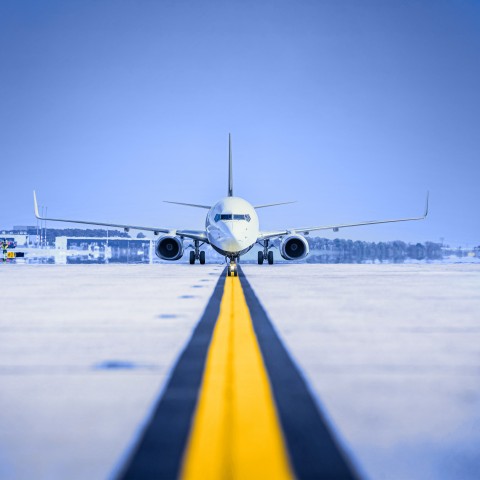
Operational excellence in air freight
Our gateway strategy
DACHSER Air & Sea Logistics operates a gateway network with access to company-owned locations around the world. At local level, we also work closely with trusted partner organisations. By combining global reach with local expertise, we consolidate cargo at the world’s leading airports and seaports and arrange onward transport from there.
Our gateway strategy creates the ideal foundation for integrated and highly efficient supply chain solutions worldwide:
Strategic gateway connections at key airports across the Americas, Asia and Europe
- High departure frequencies
- Flexible loading options with secured capacities
- Efficient cargo handling
- Globally standardised processes
- Transit time monitoring
Our Global Quality Strategy
We work exclusively with partners who share our values and deliver consistently high standards of performance. This enables us to provide reliable air freight services and long-term operational excellence.
Compliance with global customs and air freight regulations for a smooth and secure supply chain
Air freight is the most highly regulated mode of transport. Regulatory requirements and legal frameworks are continuously evolving, and customs regulations can vary significantly from one country to another. As a trusted logistics partner, we support you in maintaining a secure air freight supply chain and ensuring the efficient import of goods into destination markets.



Frequently asked questions about air freight
What are the advantages of air freight compared with other modes of transport?
The main advantages of air freight are:
- Speed (short transit times across long distances)
- Reliability and planning certainty (precise flight schedules and frequent departures support dependable operations)
- Security (high security standards and a low risk of damage)
As a result, air freight transport is particularly suitable for time-critical, temperature-sensitive and high-value goods. Emergency aid supplies, perishable goods, live animals and plants, as well as urgent spare parts, can be transported accurately and on schedule over long distances using air freight.
What are typical air freight costs?
Air freight costs are generally calculated based on the volumetric weight of a shipment (kg/6 dm³ or 1 m³ = 167 kg). To calculate this, the shipment volume in cubic metres is multiplied by 167. For heavy shipments, the actual weight may be used instead.
In general, transporting large and heavy goods by air freight is more expensive than road or sea freight transport.
In addition to size and weight, route selection and transport conditions also influence pricing. Using freightquotation within the DACHSER eLogistics portal, customers can calculate freight rates in real time. Alternatively, our contact form can be used to request a non-binding quotation.
Which goods are suitable for air freight shipping?
Alongside speed and reliability, security is a key advantage of air freight shipping. Due to stringent aviation security requirements, the risk of damage is considerably lower than with many other transport modes.
This makes air freight ideal not only for urgent and perishable goods, but also for particularly sensitive and valuable cargo, including:
- Humanitarian aid supplies
- Pharmaceuticals and chemical products
- Machinery and spare parts
- High-tech products and electronic equipment
- Live animals and plants
- Other sensitive, high-value or theft-prone goods
What are the requirements for air freight packaging?
Shippers are responsible for ensuring that goods are packaged appropriately to prevent damage during transport. Cargo is often stacked during air transport, which means outer packaging must be robust enough to withstand pressure, impacts, vibration and temperature fluctuations.
Packaging should also avoid revealing information about the contents or the value of the goods.
As a DACHSER Contract Logistics customer, you benefit not only from the combination of transport and warehouse logistics, but also from a broad range of Value Added Services. Several DACHSER locations offer labelling and packaging services for air freight shipments and provide advice on the handling of secured air freight.
Which air freight incoterms are commonly used?
Incoterms (International Commercial Terms) are internationally recognised contract terms that define the responsibilities of buyers and sellers during transport.
The most common air freight incoterms include:
- EXW (Ex Works): The buyer assumes responsibility for transport and insurance from the seller’s premises.
- CPT (Carriage Paid To): The seller pays for transport to the agreed destination.
- CIP (Carriage and Insurance Paid To): The seller pays for both transport and insurance.
- DDP (Delivered Duty Paid): The seller is responsible for transport, insurance, import customs clearance and duties.
- DAP (Delivered at Place): The seller covers transport and insurance costs, but not import duties or taxes.
Selecting the correct air freight incoterms helps allocate responsibilities clearly and reduces the risk of delays or misunderstandings during transport.
What should be considered for dangerous goods air freight?
Goods classified as dangerous under applicable dangerous goods regulations must be labelled and packaged according to their hazard classification when transported by air.
In accordance with IATA regulations, the following information must be clearly visible on the outer packaging:
- UN hazard class
- UN number
- Proper shipping name
- Packing group
- Packing instructions
- Net quantity of dangerous goods
In addition to the air waybill, a Dangerous Goods Declaration (DGD) must be provided containing all relevant information relating to the shipment. This ensures compliance when shipping dangerous goods by air freight.
Which air freight regulations must be observed?
When shipping goods by air freight, the agreed Incoterms, packaging regulations and aviation security requirements must be observed.
Cargo must be inspected or screened before transport. Where the shipper is registered as a known consignor, security controls can often be processed more efficiently.
Additional legal requirements apply to dangerous goods, particularly in relation to labelling, packaging and documentation.
Which air freight documentation is required?
The following documents are typically required for international air freight transport:
- Export Accompanying Document (ABD)
- T1 transit document
- Preference certificates (EUR.1, A.TR)
- Air waybill / forwarding order
- Packing list and delivery note
- Certificate of origin
- Long-term supplier declarations
- Customs export confirmation
- Commercial and proforma invoices
- Declaration of Conformity
- Safety Data Sheets
- Test reports for lithium-ion batteries
- AEO certification
- Customs authorisations where applicable
These documents support compliant and efficient air freight documentation processes for international trade.
Air Freight Incoterms
The attached PDF provides an overview of Incoterms® 2020 to support your day-to-day international transport operations and air freight activities.