
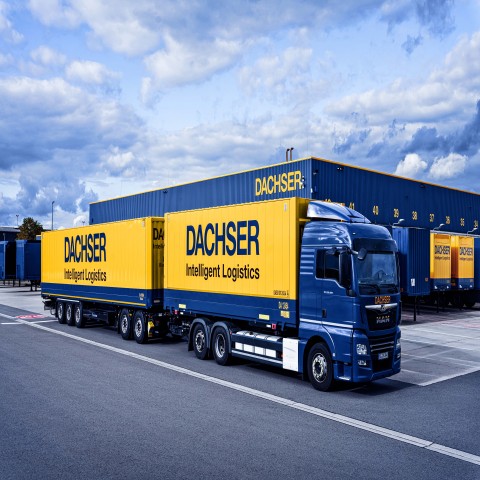
FTL logistics for different transport profiles
We organise full loads for regularly occurring larger volumes of goods from industry and retail. Regular transports and defined departure requirements can be transferred into a suitable transport concept.
For industries such as chemicals, consumer goods or DIY, we take into account special requirements for vehicles, handling and the transport process. These include, for example, dangerous goods transport or other specific transport concepts.
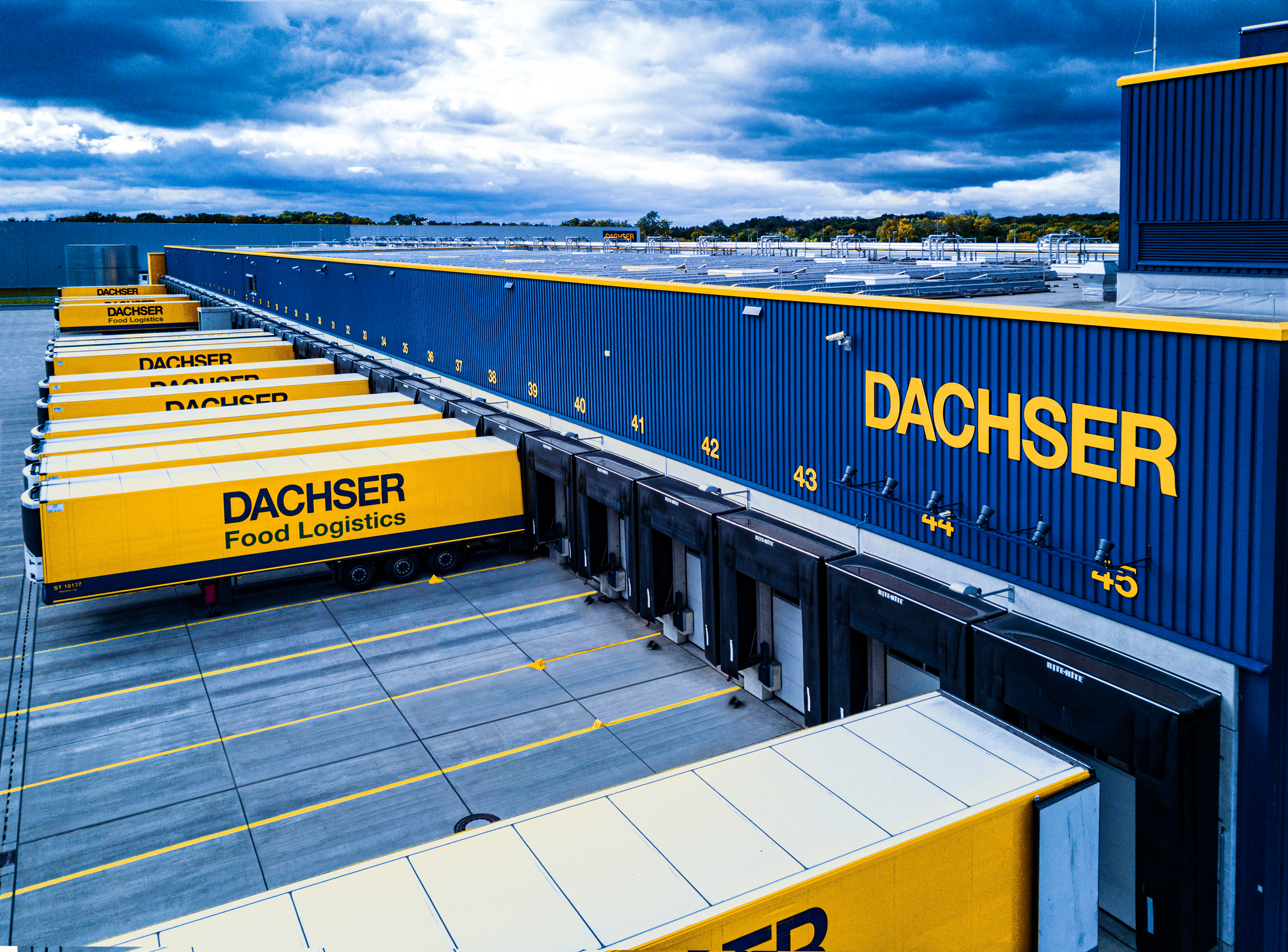
With DACHSER Food Logistics, your food full loads reach their destination safely in compliance with the required hygiene standards and with an unbroken cold chain.
We combine FTL transport with air and sea freight and organise the pre- and on-carriage between shipper, airport, port and recipient.
European network for your FTL transport
Our European network connects key economic regions and forms the basis for your FTL transport. We transport full loads directly from the shipper to the recipient and integrate them into national and international flows of goods.

Extensive connectivity
Our own branches and partner locations enable FTL transport within Europe and across national borders.

Predictable transport processes
Regular departures create reliable shipping cycles for procurement and distribution.

Direct transport routes
FTL shipments can be transported directly from the shipper to the recipient without load-related transshipment. This reduces interfaces along the transport route.
Quality management for your FTL freight





Frequently asked questions about FTL transport and full loads
What is an FTL shipment or full truckload?
FTL stands for "full truckload." With a full truckload, the truck is available exclusively for one customer's freight. The full truckload travels directly from the loading point to the consignee and is not transshipped along the way. FTL is particularly suitable for larger shipment volumes, time-critical transports, and goods with special requirements.
From what size is an FTL shipment worthwhile?
An FTL shipment is primarily an option for quantities of goods that largely or completely fill a truck. A full truckload can also make sense for smaller volumes if direct routes, fixed time windows, or special vehicle and handling requirements are important. Specific weight, pallet, or volume limits depend on the vehicle type, route, and transport profile.
What are the advantages of FTL logistics over groupage and partial loads?
With groupage, many smaller shipments are consolidated in a standardised network. With partial loads, too, several shipments share the available vehicle capacity. For a full truckload, by contrast, the truck is dispatched exclusively. This eliminates transshipment, allows departure times to be planned individually, and makes it easier to take special transport requirements into account.
To which countries does DACHSER offer FTL transport?
DACHSER organises FTL shipments on national, European, and pan-European routes. Which connection is suitable for a specific full truckload depends on factors such as the origin and destination, type of goods, vehicle requirements, and other transport requirements.
How are prices for FTL shipments calculated?
The cost of transporting a full truckload depends on various factors. These include in particular the route and distance, the type of vehicle required, the weight and volume of the freight, and time requirements and additional services. On this basis, DACHSER prepares an individual quote for the respective transport.
Can I combine FTL shipments with other DACHSER services?
Yes, FTL shipments can be combined with warehousing, customs services, and air and sea freight solutions, for example. A full truckload can be used as a standalone road transport or as pre-carriage or on-carriage within an international transport chain.
What does an FTL carrier offer?
An FTL carrier is a logistics service provider that organises complete vehicle capacities for larger shipments. DACHSER takes care of planning full truckloads on national and international routes.