


Components of omnichannel logistics at DACHSER
Consistently implemented omnichannel logistics improves supply chain efficiency, reduces operating costs and enhances scalability. Transparent transport and delivery processes make traceability easier and support long-term customer satisfaction.
Our logistics services for B2B customers:
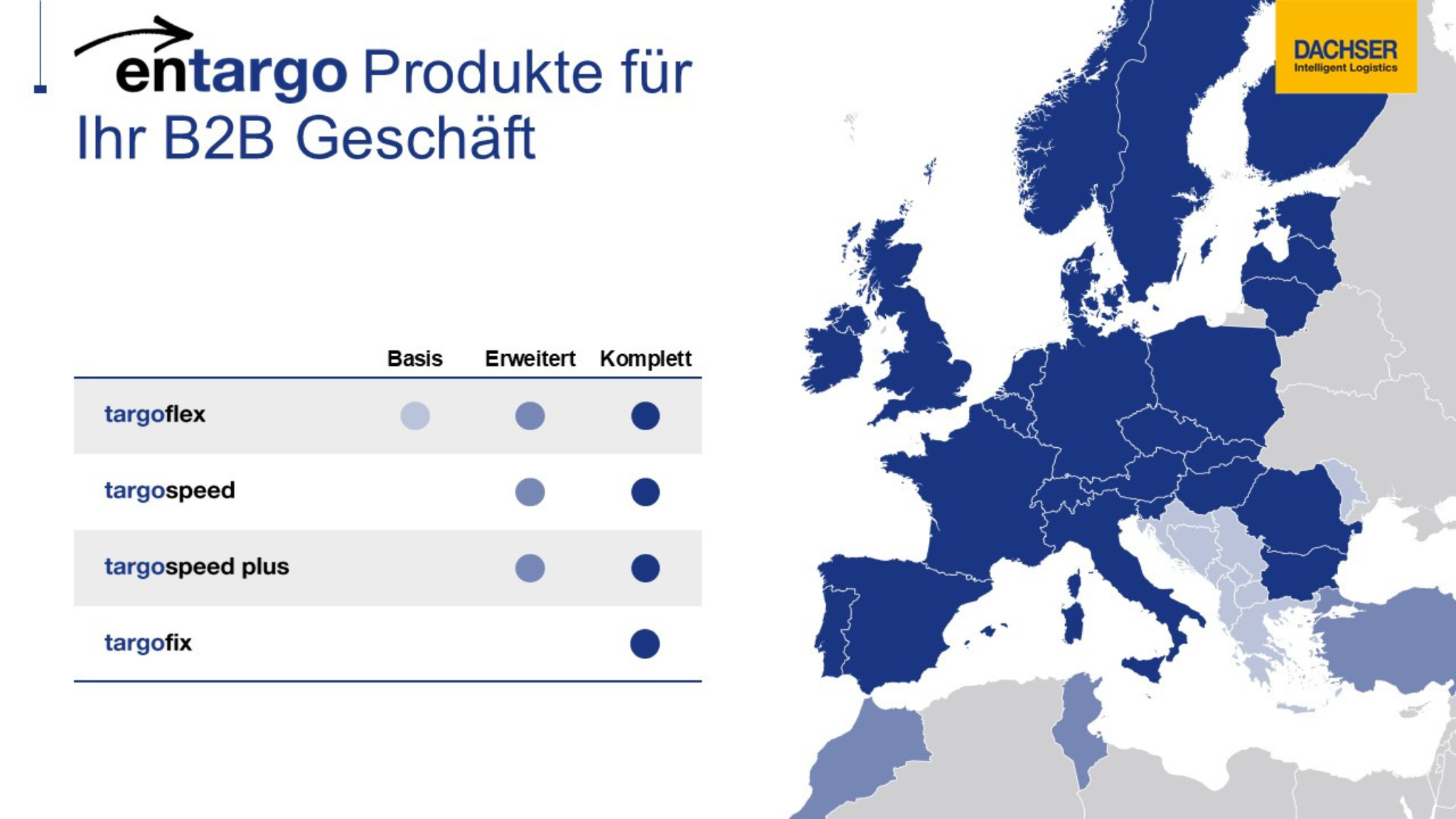
- Transport: transit-time optimisation, dropshipping, distribution, procurement and returns logistics
- Tracking and tracing: end-to-end tracking from collection to delivery, including the option to send a tracking link to the recipient
- Value-added services: flexible delivery options tailored to requirements
- Delivery service as required: kerbside delivery, delivery to the point of use or tail-lift delivery
We enable customised logistics processes with an optimally coordinated delivery service. End-to-end shipment tracking provides maximum transparency for all parties.
Our logistics services for B2C customers:
- Transport: one-person handling, depending on product requirements, through to the consumer
- Usability and transparency: online supply chain event management and automated scheduling or notification of the delivery date
- Value-added services: neutral shipping, permission to leave goods, timed delivery or delivery to the recipient’s point of use
With more than 190 warehouses worldwide, DACHSER is a reliable partner for integrated logistics solutions. Customers benefit from uniform process and service standards and flexible automation that optimises logistics processes.
DACHSER warehousing services also include transport solutions, parcel solutions and various value-added services.
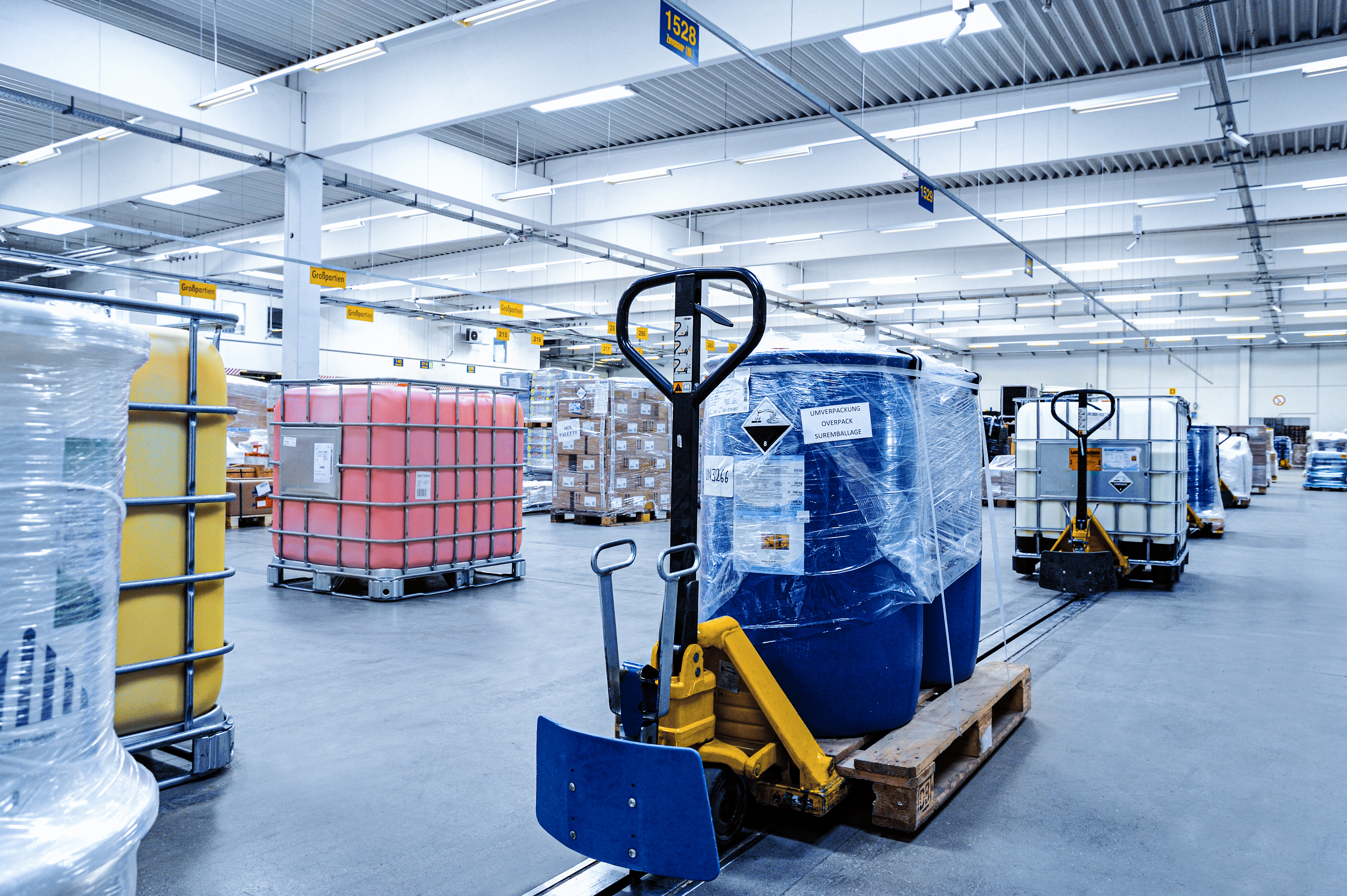
In addition to value-added services for B2B and B2C logistics, DACHSER offers a wide range of services to optimise the entire value chain. These include order picking, labelling, shelf stocking, pre-assembly, functional testing, returns management, dangerous goods handling and customs handling.
With our comprehensive fulfilment and transport service, you can implement your dropshipping sales strategy efficiently. As your logistics partner, we support you with coordination among the parties involved and with implementation. We manage orders at all interfaces and provide neutral shipping to your B2C customers. You have full transparency regarding the status and delivery times of your shipments. Your local DACHSER branch is your point of contact for all service, quality and billing matters.
Do you need worldwide or Europe-wide parcel shipping? We design and organise your shipments using our established international solutions, tailored to your product and delivery requirements.
As a contract logistics provider, we develop precisely tailored fulfilment solutions for your omnichannel sales. We combine cost-efficient standard logistics services with individual services to create intelligent logistics solutions. Outsourcing all logistics processes frees up resources within your company. At the same time, the integrated solutions improve process quality and, in turn, your customers’ satisfaction.
As part of its long-term climate protection strategy, DACHSER is continuously expanding Emission-Free Delivery, a locally emission-free city-centre delivery concept using battery-electric vehicles for all shipment sizes, from electric trucks to e-cargo bikes.
Omnichannel services for different industries
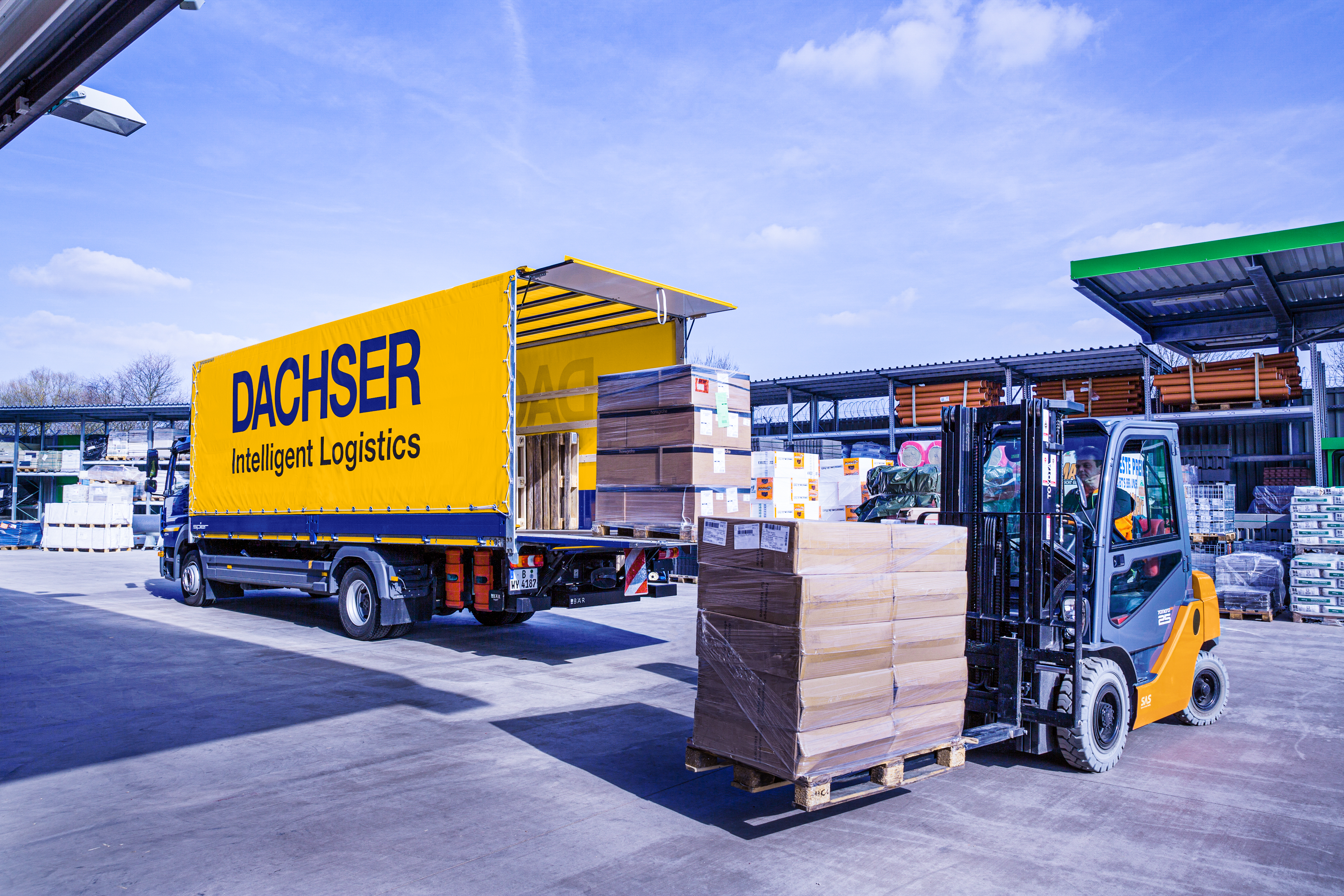
With many years of experience and broad expertise, DACHSER is a reliable omnichannel partner for companies in a wide range of industries.


Key reasons for omnichannel logistics
Customer expectations and purchasing behaviour
Customers value and increasingly expect individual purchasing options. Competitive companies need to offer transparent product availability, a variety of ordering and delivery options, and individual shipment tracking.
Efficient processes and scalability
Delivery times that meet customer requirements are only possible with connected logistics. Warehouses must organise processes efficiently and transparently to ensure rapid deliveries to retailers and end customers. This requires scalable systems with a high level of service, flexibility and automation.
Rapid order processing
Smart, connected transport and warehousing systems ensure that orders are processed, picked and delivered as quickly as possible across all sales channels, while companies retain transparency over inventory.
Cost pressure
High customer expectations, rising energy and transport costs, and increasing competition intensify price and cost pressure in retail. DACHSER helps companies design needs-based supply chains and optimise logistics processes.
Alternative delivery concepts
Growing e-commerce sales increase delivery traffic and urban emissions. DACHSER supports greener supply chains through improved vehicle utilisation and Emission-Free Delivery for locally emission-free last-mile deliveries.

Frequently asked questions about omnichannel
What is omnichannel?
Omnichannel sales concepts focus on the customer journey. These days, this journey is incredibly diverse and demanding. The aim of an omnichannel strategy is to bring all sales channels and customer touchpoints together within a single system and to serve them equally. This is the role of logistics: it transforms the entire supply chain into a holistically networked system for the flow of information and goods. Production, warehousing, transport, delivery and customer communication are closely interlinked and operate transparently. High customer satisfaction, rising sales, efficient processes and reduced operational costs are the result of a bespoke and consistently implemented logistics strategy.
What is the difference between single-channel, multi-channel and cross-channel?
All the options mentioned are sales strategies. With single-channel, the company is accessible via only one sales channel; with multi-channel, via at least two channels, such as an online shop and a catalogue. Cross-channel, on the other hand, links all the sales channels and points of sale used. The customer can, for example, order a product online, buy it in-store, or order it online and collect it in-store. Omnichannel differs from cross-channel in that it connects not only the sales channels and points of sale, but also all contact options and communication channels. As a result, the customer can use several channels simultaneously, whilst the networked database provides complete transparency of all goods flows.
What are omnichannel solutions?
The prerequisite for a successful omnichannel concept – and, at the same time, one of the most important omnichannel solutions – is the creation of a holistic information system spanning all process components. Many other omnichannel solutions form an integral part of this IT infrastructure. For instance, all stock levels must be recorded and accessible across all channels in real time so that production, warehousing and delivery processes can be optimally coordinated. Furthermore, there are solutions designed to ensure cross-border movement of goods and customer-focused last-mile delivery. Another important point is that retailers should ask themselves, when selecting an omnichannel system, whether it meets their current and future technical requirements. This is the only way to ensure that omnichannel solutions such as Click & Collect, Click & Reserve or Ship-from-Store can keep pace with planned developments.
Why is an omnichannel strategy so important?
Omnichannel puts the consumer at the centre. It optimally meets all customer requirements by reducing barriers to purchase, optimising customer services and making delivery processes more flexible. At the same time, companies with an omnichannel sales solution reduce their operational costs and, ideally, increase their sales figures.
What does dropshipping mean?
Dropshipping is a form of direct trade in which online retailers have goods delivered directly from the manufacturer to the retailer or the end customer without intermediate storage. In this way, retailers can offer a wide range of products without needing storage space or their own transport operations. Incoming orders are fulfilled entirely by the dropshipping partner – including parcel tracking and returns management.
What is omnichannel fulfilment?
Omnichannel fulfilment refers to the handling of the entire ordering and delivery process – from receipt of the order to delivery of the goods to the customer. This encompasses intelligent stock management as well as storage, packaging, order picking and the dispatch itself. Nowadays, cost-effective, resource-efficient and, above all, customer-friendly omnichannel fulfilment is a crucial factor in the competitiveness of retail businesses.